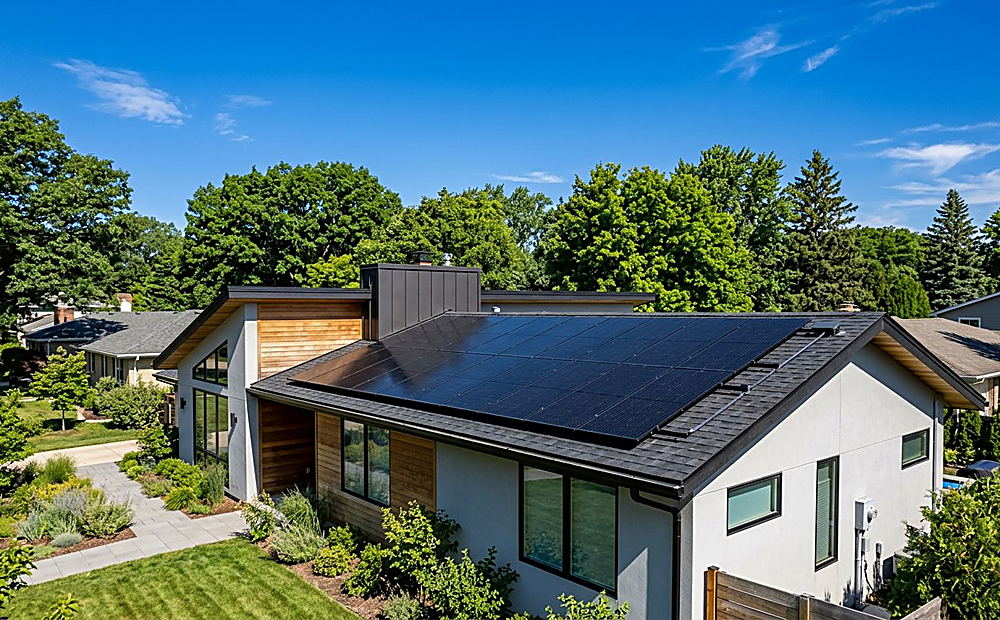
Solar has moved from novelty to practical home upgrade. The question is no longer whether panels work — it is whether they suit your roof, your household rhythm and your plans for the years ahead. Here is how we walk homeowners through that decision.
Start with the roof, not the panels
Solar is a commitment that lives on top of your roofing. If the roof is nearing the end of its working life, the sensible order is roof first, panels second — otherwise you will pay to remove and refit an array when the covering finally fails.
- Age and condition of the existing covering, inspected slope by slope.
- Pitch and orientation, which determine how much of the day the array is productive.
- Structural soundness of the rafters and the condition of flashings at mounting points.
- Space for cables and equipment that stays tidy rather than improvised.
Shade decides more than you expect
A single chimney, mature tree or neighbouring gable can pull down production from a whole section of an array. We measure shade through the day rather than judging it by eye, then plan panel placement and optimisers around what we find. Sometimes the honest answer is fewer panels in better positions instead of a roof covered edge to edge.
Ask for a shade plan, not just a system size
A good proposal shows where panels will sit, what shading they will experience and how the system behaves in a cloudy week — not merely the headline capacity.
Match the system to your household rhythm
Solar rewards homes that use power while the sun is up — daytime appliances, cooling, water heating, a home office, a charged electric vehicle. Households that are out all day benefit from different choices, often including battery storage, so energy collected at noon is available in the evening.
We look at your usage pattern rather than a generic average, because the right system for a family working from home is rarely the right system for an apartment-style household that is empty until dusk.
Batteries, backup and peace of mind
Storage changes what solar can do for you. A battery lets you keep the lights, internet and refrigeration running through an outage, shifts cheap solar energy into peak hours, and reduces how much you depend on the grid overall. For households in storm-prone areas, backup capability is often the deciding factor — and it pairs naturally with the security and safety systems we install.
What installation day looks like
Mounting rails and waterproofed fixings go on first, followed by panels, inverters and cabling, with everything labelled and photographed before we close up. Your power is interrupted briefly and then restored; most installations are complete within a working day or two, with a commissioning walkthrough at the end so you know exactly how to read your monitoring app.
Think about the next homeowner too
Well-documented solar, clean cabling and a properly integrated roof upgrade make a house easier to sell, not harder. We provide the paperwork that future buyers, inspectors and utility teams will ask for — and we are still reachable afterwards, which matters more than any sticker on the inverter.
Deciding together
If you would like an honest conversation about whether solar fits your home and your timeline, our team will assess the roof, review usage and give you options with the trade-offs spelled out. No pressure, no jargon.